

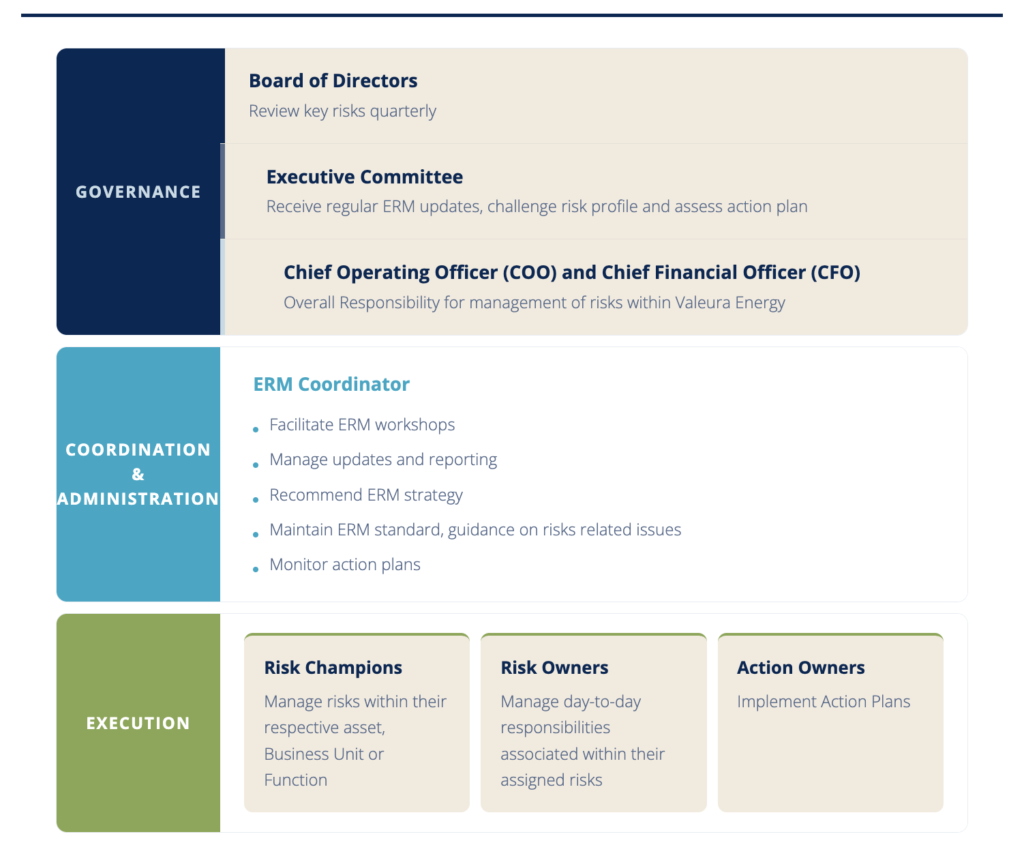
Valeura’s risk management approach begins by defining the business context, identifying risks across operations, and recording them in a corporate-level enterprise risk register.
Inputs to the ERM process are drawn from three sources: Board-level input, management input, and risks identified through the operational risk management process:
- Board-level Inputs: The Board and executives identify high-level risks from a top-down perspective.
- Management-level Inputs: Risk Champions, Risk Owners, and function heads oversee operational risks and conduct quarterly reviews within their respective areas.
- Operational Risk Management (ORM) Process: Business functions assess operational risks in line with ISO 9001, ISO 14001, and ISO 45001 standards. Identified risks are recorded in the enterprise risk register, which is periodically reviewed and updated. High-risk issues are prioritised and escalated through the ERM process.
Identified risks are consolidated in the enterprise risk register, categorised, and presented to governance bodies overseeing the ERM process.
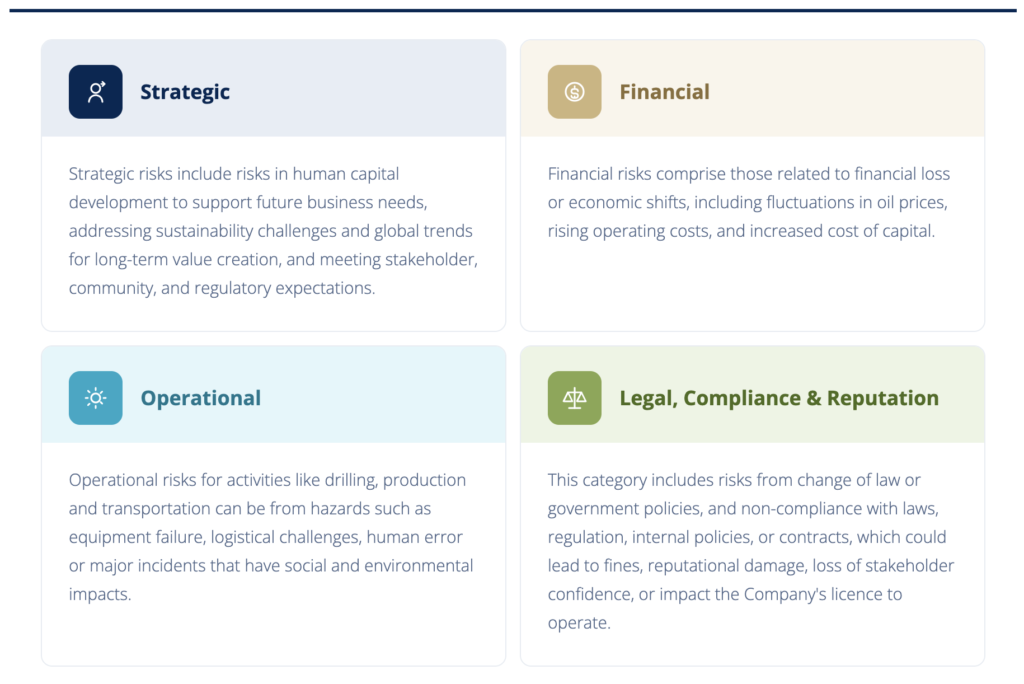
Sustainability and ESG-related risks are integrated into the Company’s broader risk categories, including strategic, financial, operational, and legal/compliance risks. For example, sustainability trends, stakeholder expectations and regulatory developments are captured under Strategic and Legal/Compliance risks, while environmental and social impacts from operations fall under Operational risks.
This approach embeds ESG risks within the enterprise-wide risk framework, supporting comprehensive oversight and informed decision-making.
Valeura evaluates risks based on their potential impact on the Company’s objectives and likelihood of occurrence to determine overall risk levels.
Risks are categorised as High, Medium, or Low.
- High risks exceed tolerance and require urgent attention
- Medium risks require active management
- Low risks are acceptable and managed through routine controls with periodic monitoring.
All risks, including sustainability risks, are prioritised accordingly, with mitigation efforts focused on high-risk items.
Valeura has established systems and processes to manage identified risks. For risks classified as High, the Risk Champion must implement mitigation measures to reduce the risk to an acceptable level. For Medium risks, the Risk Owner is responsible for implementing appropriate controls and ongoing monitoring. Low risks are monitored to detect early warning indicators.
Where risks remain after mitigation, they are recorded as residual risks and continue to be managed through the ERM process.
Valeura continuously monitors business and sustainability risks, including residual risks, to identify changes in risk levels and ensure mitigation measures remain effective. The ERM register is reviewed regularly by executive management and updated at least quarterly. It is also reported to the Board of Directors to support informed decision-making.
Crisis Management
As part of its risk management approach, Valeura has established a framework to respond to emergency situations or business disruptions, such as oil spills or accidents. The framework follows a three-tier structure with clearly defined roles and responsibilities at each level. These teams work collaboratively to manage incidents and ensure business continuity.
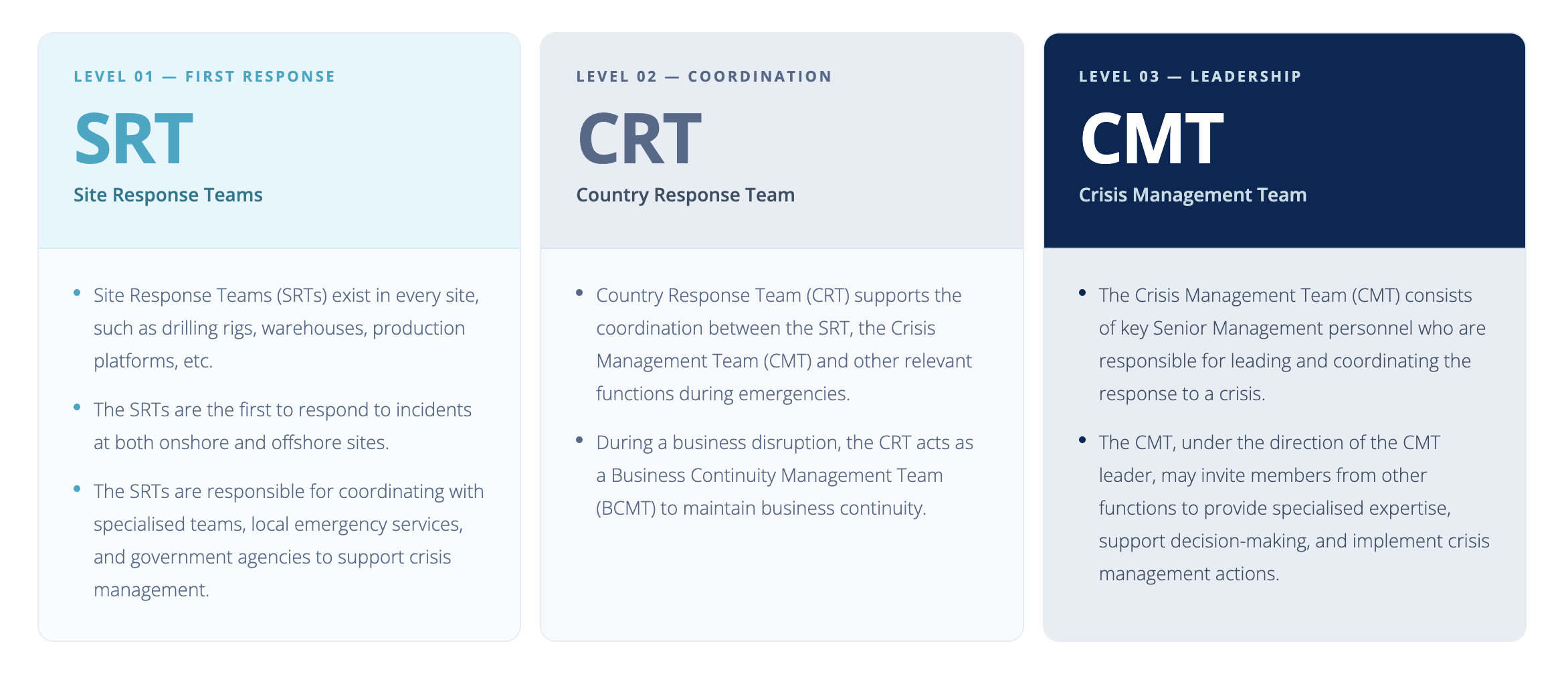
Valeura has developed various emergency response plans to guide the Company’s response to industry-relevant scenarios, including oil spills, typhoon-related evacuations, fires and explosions, and medical emergencies. These efforts are supported with ongoing training for the CRT team, coupled with regular on-site emergency drills and exercises.
On-Site Emergency Drill and Exercises
To strengthen offshore emergency preparedness, Valeura follows a scenario-based training and exercise programme:
- Field readiness: Site Response Teams (SRTs) are established across facilities to respond rapidly to emergencies.
- Comprehensive planning: Emergency drill plans address key scenarios, including oil spills, extreme weather, fires, explosions, and medical emergencies.
- Offshore coverage: Drills are conducted across all Valeura offshore facilities.
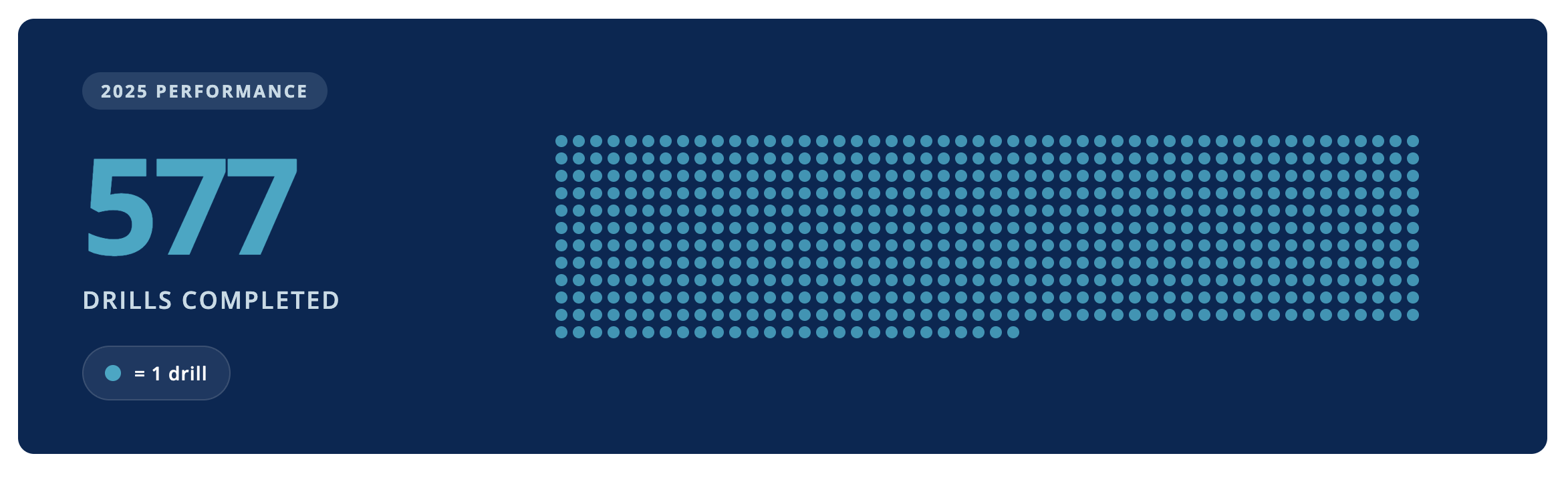
- 2025 performance: 577 drills covering multiple risk scenarios were completed across all offshore operations.